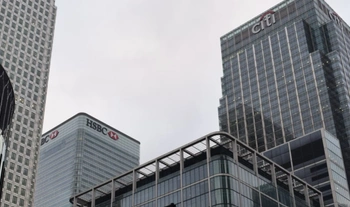
Back-office jobs under threat at Singapore investment banks

We heard about redundancies in Hong Kong some time ago, but news of layoffs in Singapore’s financial sector have only hit the headlines recently.

The Business Times reported that Bank of American Merrill Lynch (BoAML) and UBS have both fired i-bank staff. And other firms like HSBC have confirmed the restructuring of their Singapore business. Although Asian redundancies haven’t been large-scale so far, staff are certainly getting the jitters.

Pain in the back

One headhunter, who asked not to be named, says RBS may make cuts in Asia later this year. Citi too, could potentially slash investment banking jobs given its focus on global transaction services and retail. Another anonymous source tells us that Barclays and J.P. Morgan could make layoffs. Those in client-facing i-bank roles can breathe a little easier though: firings have been mostly in the back office thus far, he adds.

Another recruiter, Farida Charania, chief executive officer, banking and financial services, Nastrac, explains the vulnerability of back-office roles in the current market: “Banks usually function over capacity and with deal flows being reduced, capacity utilisation is less and so is the need for operations.”

This is not the GFC, or the West

Arran Huddleston, head of account management Asia Pacific, Webbe International, says this round of retrenchments is different from the GFC’s sweeping reductions to the cost base and P&L. Those cuts resulted in large amounts of “institutional memory” being lost, a mistake banks have since learnt from.

Recruiters, however, say Singapore and Asia continue to be largely safeguarded from massive retrenchments. Charania explains: “Singapore is not merely a delivery centre; it’s also a business centre. There is a lot of work being done here, given the growth of Asian businesses.” She reckons firms are more likely to redeploy staff to other areas of the bank rather than fire them outright.

Huddleston says regardless of IB performance, Basel III has forced firms to focus on their sweet spots. The Macquarie and Julius Baer i-banking/private banking collaboration, for example, shows how both businesses are capitalising on each others’ strengths, he says. Such unions are increasing likely.

Comments (9)
  1. As a matter of fact, RBS has already done a round of layout

  2. Time to join the civil service?

  3. They will cut staff. Then, the head of finance/operations etc will initiate some new projects ( presumably to streamline processes) and get approvals to hire – which will be in the form of expensive white driftwood. Happens at every cycle!

  4. in the last GFC, the banks hired immediately after firing. IBs will never learn. They can never cut costs — even if they try — over spending is a something so embedded in its culture.

  5. Barclays has already done their first round of retrenchments.

  6. Morgan Stanley finance is the latest hit.

  7. Other banks are also retrenching and they outsourced their roles as well as set up new hubs overseas. Efforts are not seem to develop the affected staff into other roles. Contract staff gets to continue employment while permanent good experience staff are made redundant .

  8. With more jobs offshored to overseas, redundanies have been on the upward trend. Casualties are mostly native Singaporeans. Most Foreigners are spared. At least this is the trend I have been experiencing . Some jobs obviously can be filled up by locals are being occupied by foreigners. Once they established their footprint here, they will start hiring and promoting their own community. Singaporeans have gradually becoming 2nd or 3rd class citizens.

  9. The Singapore Government must do something to take care of local Singaporeans. Tighting the approval process of Employment/relevant Passes must happened and increasing the charges of the passes will not help much. HR Professionals must also be fair when dealing with affected redundant employees, where the first priority is to place or open up the vacancies to these pool of affected people in the companies.

React

You can react by using a display name and your personal information will not be displayed.

Tell us your news

Email the editor with your feedback, news, tips or topics.